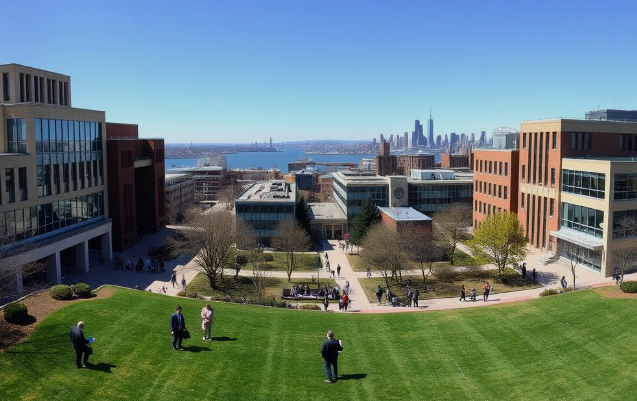
Stevens Institute of Technology is a private research university located in Hoboken, New Jersey, across the Hudson River from New York City. Founded in 1870, the university has a long history of engineering and technological education and has expanded into areas including computing, business, finance, science, and the arts. Its location provides students with access to the professional and cultural opportunities of the New York metropolitan area while maintaining a campus environment centered on technology, research, innovation, and hands-on learning. Students considering Stevens often look at its academic programs, admissions process, research opportunities, campus environment, career preparation, and connection to nearby industries when deciding whether it fits their educational goals.
History of Stevens Institute of Technology
The university traces its origins to Edwin A. Stevens and the Stevens family, known for engineering and technological innovation. Edwin A. Stevens provided resources in his will for establishing an institution dedicated to education, and the university opened in 1870 with an engineering-focused curriculum.
Over time, Stevens expanded beyond its original engineering focus. Its history includes developments in technology and education, including becoming an early major institution to require students to use personal computers and developing an early intranet. The university has continued building its identity around technology, innovation, research, and practical applications.
Location and Campus Experience
The Stevens campus is located in Hoboken, New Jersey, with views of the Manhattan skyline. Its location is one of the distinctive aspects of the student experience because New York City is accessible from Hoboken by a short train ride.
The campus combines academic buildings, research facilities, student spaces, and outdoor areas. Students can experience a university setting while remaining close to the professional, cultural, and entertainment opportunities of New York City.
For students interested in internships and networking, the location can also provide access to companies and organizations throughout the wider metropolitan area.
Academic Programs
Stevens offers programs across engineering, computer science, business, finance, science, and other disciplines. Technology is incorporated throughout its academic offerings, allowing students in different fields to work with modern tools and interdisciplinary approaches.
Undergraduate students can explore majors and minors as well as specialized academic opportunities. Graduate students can pursue master’s and doctoral programs across several fields. Stevens currently lists more than 40 master’s programs and more than 20 Ph.D. programs, including programs in business, computer science, engineering, science, and arts and humanities.
Engineering and Technology Education
Engineering remains an important part of the university’s academic identity. Students can study areas such as mechanical engineering, civil engineering, electrical and computer engineering, chemical engineering, and other technology-focused disciplines.
The academic approach combines classroom learning with practical experiences. Students may participate in laboratory work, team projects, research, internships, and other activities designed to connect theoretical concepts with real-world applications.
This approach can be useful for students who prefer learning through projects and experimentation rather than relying exclusively on traditional classroom instruction.
Computer Science and Data-Focused Programs
Computing is another significant area at Stevens. Students can pursue computer science and related programs that address software, data, artificial intelligence, cybersecurity, information systems, and other areas of modern technology.
The growth of digital industries has increased demand for professionals who understand both technical concepts and their practical applications. Stevens incorporates technology into programs across disciplines, allowing students to explore computing in combination with business, engineering, finance, and other fields.
Business and Quantitative Finance
Stevens also offers programs in business and finance. These programs can be particularly relevant to students interested in the intersection of technology, analytics, financial markets, and management.
Quantitative finance combines financial concepts with mathematics, statistics, computing, and analytical methods. Business students can also benefit from the university’s location near New York City, where financial institutions and technology companies provide opportunities for professional exposure.
Hands-On Learning and Research
Experiential learning is an important component of the Stevens educational model. The university describes its curriculum as technology-infused and emphasizes applied learning, internships, cooperative education, projects, and real-world experiences.
Research is another major component. Students can work with faculty on projects involving areas such as engineering, computing, finance, energy, cybersecurity, medicine, and other fields. Some students have opportunities to contribute to professional research, patents, or entrepreneurial projects.
These experiences can help students develop technical knowledge alongside communication, teamwork, and problem-solving abilities.
Entrepreneurship and Innovation
Innovation and entrepreneurship are integrated into the Stevens environment. Programs such as LaunchPad and iSTEM provide opportunities for students to develop ideas, work with mentors, access resources, and explore the process of creating new products or businesses.
The university also holds an Innovation Expo that highlights student projects and ideas. Such programs can provide students with experience beyond traditional coursework by allowing them to develop concepts and consider how technology can address real-world needs.
Undergraduate Admissions
Prospective undergraduate students can apply through the Common Application or Coalition Application, depending on their application pathway. Stevens provides separate information for first-year, transfer, international, and specialized applicants.
Applicants should review the current admissions requirements and deadlines directly through the university because application policies can change. Academic preparation, application materials, and other requirements may vary depending on the student’s circumstances.
Students should also consider their intended major when preparing for admission because some programs may have particular academic expectations.
Graduate Admissions
Graduate applicants can choose from a broad selection of master’s and doctoral programs. Requirements vary according to the specific program, so prospective students should review the requirements for their intended field.
Stevens also offers flexible study options, including programs delivered through StevensOnline. Graduate education combines advanced coursework with research, practical applications, and professional development.
International students should pay particular attention to program-specific requirements, language requirements, documentation, and application deadlines.
Student Career Opportunities
Career preparation is an important part of the Stevens experience. The university emphasizes internships, cooperative education, research, industry connections, and practical projects. Its location near New York City can provide additional access to employers and professional networks.
Students can explore careers in engineering, software development, finance, consulting, cybersecurity, data science, business, research, and many other fields.
The university reports that companies across technology, finance, healthcare, consulting, and other industries recruit Stevens graduates.
Student Life and Campus Environment
Although Stevens has a strong technology and engineering identity, student life extends beyond academic programs. Students can participate in organizations, activities, events, research groups, entrepreneurial programs, and collaborative projects.
The campus environment provides opportunities for students with different interests to interact. The university’s location in Hoboken also gives students access to restaurants, parks, waterfront areas, and the broader New York metropolitan region.
Choosing the Right Program
Students considering Stevens should begin by identifying their academic and professional interests. Someone interested in software development may focus on computer science, while another student may prefer engineering, finance, business, or a combination of disciplines.
It is also useful to examine course requirements, research opportunities, internships, campus resources, program length, and potential career paths. Comparing specific programs is generally more useful than evaluating the university only by its overall reputation.
Cost and Financial Aid
College costs can include tuition, fees, housing, meals, books, transportation, and personal expenses. The total amount varies according to the student’s program and living arrangements.
Stevens provides financial aid information for eligible students, and prospective applicants should review the current cost and aid information before making enrollment decisions. Because tuition and fees can change from year to year, current university information should be used when calculating the expected cost.
Key Points to Remember
Stevens is a private research university in Hoboken, New Jersey, with a history dating to 1870. Its academic identity is strongly connected to engineering, technology, computing, business, finance, science, research, and innovation.
The university emphasizes hands-on learning, research, internships, entrepreneurship, and connections with industry. Its location near New York City is another important feature for students interested in professional and cultural opportunities.
Tips for Prospective Students
Start by identifying the specific degree program that matches your interests rather than focusing only on the university as a whole. Review the curriculum, required courses, research opportunities, internship options, and available student resources.
Check current admission requirements and deadlines well before applying. Students should also estimate the full cost of attendance, investigate available financial aid, and consider housing and transportation.
If possible, visiting the campus or attending an official information session can provide a better understanding of the environment and academic experience.
Final Thoughts
Stevens Institute of Technology combines a long engineering tradition with modern programs in computing, business, finance, science, and other technology-related fields. Its Hoboken location places students close to New York City, while its academic approach emphasizes research, practical learning, innovation, and professional development. For prospective students, the most useful approach is to examine individual programs, admission requirements, costs, research opportunities, campus resources, and career pathways before making an enrollment decision. A careful comparison of these factors can help students determine how well Stevens aligns with their academic interests and long-term goals.
Frequently Asked Questions
1. Where is Stevens Institute of Technology located?
Stevens is located in Hoboken, New Jersey, at 1 Castle Point Terrace. The campus is situated along the Hudson River and provides views of Manhattan.
2. When was Stevens Institute of Technology founded?
Stevens opened in 1870 after resources were provided through the Stevens family for the creation of an institution focused on technological and engineering education.
3. What does Stevens Institute of Technology specialize in?
The university has strong offerings in engineering, computer science, technology, business, finance, science, and related fields. Technology is incorporated across many of its academic programs.
4. Does Stevens offer graduate programs?
Yes. Stevens offers master’s and doctoral programs across areas including business, computer science, engineering, science, and arts and humanities. It also provides flexible study options through StevensOnline.
5. How can students apply to Stevens?
Undergraduate applicants can use the Common Application or Coalition Application, depending on their application type. Stevens also provides separate application pathways and requirements for transfer and international students.